If you run stores that live or die by how quickly shelves turn, cross docking is more than a logistics buzzword. Done well, it becomes a quiet engine behind higher on-shelf availability, lower handling costs, and fresher assortments. Done poorly, it becomes a chaotic, forklift ballet that burns labor and erodes trust with stores. I have implemented cross docking in apparel, consumer electronics, and grocery, and the same pattern shows up every time: the mechanics are simple, the discipline is not. The retailers who win treat cross docking as a network design choice supported by data, layout, labor planning, and vendor alignment, not as a magic fix tucked inside a cross dock facility.
What cross docking really means in a retail environment
Strip away the jargon. Cross docking is the direct transfer of goods from inbound trailers to outbound trailers with little or no storage in between. In retail, that means suppliers ship full pallets or mixed cartons to a cross dock warehouse, which breaks them down, sorts by destination, and reloads for stores or fulfillment nodes. Inventory stays in motion, which reduces dwell time and carrying cost. The cross dock facility becomes a flow-through node, not a storage point.
Two flavors matter in practice. Pure cross docking pushes pre-labeled, store-ready cases directly from receiving to shipping. Flow-through cross docking adds a short stop for value-added services like ticketing, kitting, or light quality checks. Retailers often mix both under one roof, using fast lanes for untouched flow and work cells for anything that needs prep.
Cross docking services are best applied where demand is frequent and predictable enough to justify short cycle replenishment. When orders are erratic or product needs long inspection, you reduce the benefit. The discipline sits at the intersection of purchase order accuracy, carrier reliability, dock scheduling, and clear instructions for associates. Those elements determine whether pallets glide or crawl.
Why it improves customer experience
I have never sat in a store walk and heard someone cheer for inventory sitting in a DC. Customers care about having the product on the shelf or ready for pickup on the day they want it. Cross docking improves that odds-on bet in a few practical ways.
First, it shortens the time from supplier departure to store arrival. When cartons do not detour into reserve storage, you remove touches and cut hours, sometimes days, from the cycle. In consumer electronics, moving weekly promotional bundles via cross dock shaved one to two days off transit compared with a store-and-pick model, which meant endcaps were complete by Friday morning instead of Saturday afternoon.
Second, it protects freshness and fashion relevance. In grocery, high-velocity dairy and produce benefit from every hour saved. In apparel, capsule collections can hold margin only if size curves arrive together and early enough to meet peak demand. Flow-through keeps sets intact and reduces markdowns driven by late or partial delivery.
Third, it reduces stockouts caused by DC congestion. Traditional warehouses bog down when inbound surge collides with a labor shortfall. A well-run cross dock warehouse sets visible, narrow windows by lane and holds to them. The choreography is simpler: receive, sort, ship. You stabilize throughput even when forecasts wobble.
Customers feel this as reliable availability. They do not ask how the sausage is made, but repeat visits and basket size tend to rise when core items are consistently present.
Cost mechanics that pay for themselves
The appeal of cross docking isn’t mystical. It is arithmetic across handling, storage, transportation, and shrink.
Handling cost drops because every touch costs money. A conventional DC might handle a case three to five times. Cross docking aims for two touches: one to unload and one to load. If your fully loaded labor and equipment cost per touch is, say, 20 to 40 cents per case, removing two touches across 50 million cases a year is not a rounding error.
Storage cost shrinks because dwell disappears. Even if your space is amortized, the opportunity cost of congested aisles and additional equipment is real. Seasonality can make this stark. During the fourth quarter, I have seen cross dock lanes absorb promotional flows that would have otherwise forced expensive overflow leases.
Transportation efficiency improves with consolidation. A cross dock facility can marry LTL or small supplier shipments into full truckloads to each store or region. The trick is to design consistent waves so outbound loads hit minimum cube or weight while still meeting store delivery windows. Done right, your cost per mile falls and your on-time percent rises.
Shrink can improve, not because the building has magic cameras, but because you have fewer handoffs. Every staging move invites misplacement or damage. Shortening the path cuts opportunity for loss. The caveat is that bad labeling or rushed sortation can swap store destinations. When that happens, shrink does not show in the warehouse, it shows as phantom inventory and empty pegs on aisle seven.
Where cross docking fits and where it does not
Broad brush rules help, but test your mix with real numbers. Cross docking is a strong candidate when products have high velocity, predictable demand, and packaging that can survive minimal handling. Cigarettes and chewing gum used to be classic examples. Today, think dairy, water, pet food, small appliances on promotion, and high-run basics in apparel.
It struggles with slow movers, fragile goods that need inspection, vendor packs that do not match store pack quantities, and items that require serial capture one by one. Returns and reverse logistics do not mesh well with pure cross docking either. Those flows are noisy, and they belong in a process that can pause for triage.
Geography matters. A cross dock warehouse placed too far from either suppliers or stores erodes the time advantage. You can claw some of that back with night operations and tight appointment windows, but the best networks use regional nodes near major carrier lanes or adjacent to import gateways to flatten variability.
Anatomy of a practical cross dock facility
The physical plant signals whether flow will be elegant or painful. I have walked cross docks that could move 70 inbound trailers and 70 outbound trailers in a day with fewer than 150 people, and I have seen similar volumes chew through double the labor because the layout fought the process.
The inbound side should feed directly into a set of clearly signed sortation zones. If you are running a manual sort, imagery and simple color coding beat dense wall charts. Make destinations obvious. For mixed-case operations, extendable conveyors and gravity racks reduce walking and avoid pallet clutter. If you start to see “parking” pallets stacking up mid-lane, your takt time is off and needs a reset.
For mechanized options, cross belt or bomb-bay sorters push velocity, but they only pay off at scale with consistent carton geometry and barcode quality. Retailers often underinvest in print quality at the supplier level, then wonder why their fancy sorter rejects 10 percent of cartons. Fix labels first, machines second.
Shipping doors should be assigned by route or destination clusters, not first-come. Dock control software that locks down door assignments and sequence helps more than you would expect. A dock lead with a whiteboard and discipline can also do the job, but the bigger you get, the more a digital board prevents pileups.
Data, labels, and the fight against uncertainty
Every successful cross docking operation I have seen rests on three data pillars: clean purchase orders, reliable ASNs, and scan discipline.
Purchase order accuracy sets the baseline. If a supplier cannot ship the right item in the right pack size, the cost of “fixing it at the dock” multiplies quickly. Retailers often try to muscle through by adding labor. The lasting fix is fewer exceptions upstream: tighten vendor compliance guides, and actually enforce them.
Advanced ship notices tell you what to expect. Cross docking depends on pre-allocation to stores before the truck hits your yard. Without an ASN, you are sorting blind. Expect a ramp period where ASN quality lags, and be ready to split your lanes between compliant and non-compliant vendors. Reward the ones who hit their marks with faster cycle time and better delivery windows.
Scan discipline ties physical flow to system truth. Miss a scan at induction and you have a ghost. Scan at every logical handoff: inbound door, sort induction, exception chute, outbound door. Do not over-scan to the point that associates ignore the beeps. The right number is the fewest scans that still give you traceability and proof of custody.
Labor planning and the human element
Cross docking looks lean on paper until a seasonal spike collides with sick calls. The work is repetitive and time-bound, and the window for each wave is tight. Invest in shift planning with 15-minute buckets, not loose eight-hour blocks. Measure takt time per lane. If a case requires 6 to 9 seconds to sort accurately and your inbound is 4,000 cases per hour, you can reverse engineer headcount needed per lane and then pad for breaks and learning curves.
Training pays faster in this model than in almost any other warehouse function. A two-hour, hands-on practice with real cartons, real scanners, and a time-boxed mock wave reduces early mistakes by half. People also catch label issues you didn’t see in conference rooms. They will show you which fonts smear and which placement corners peel.
Quality checks should be surgical. Sample inbound cartons by vendor and lane, not by gut feel. If the sample fails for labeling or content, route that vendor to the flow-through cell for the day and notify replenishment to adjust expectations. It is tempting to chase perfection. The better move is to protect flow by isolating exceptions quickly.
Store operations alignment
On-time to store is useless if backrooms cannot process the delivery. Cross docking accelerates the front end, and the back end must adjust or you will trade one bottleneck for another. Two changes help.
First, calibrate store delivery windows to staffing reality. Night drops can be perfect for high-volume grocery and a burden for specialty retailers with lean coverage. Ask for feedback and measure unload times. If receiving drags beyond 90 minutes for a typical truck, either reduce stops per route or increase carton-level sortation upstream so the store handles fewer mixed pallets.
Second, send clear content signals on the manifest and on the pallet. For sets and promotions, pack store-stop pallets in shelf order where possible. Even small wins count. In one chain, simply printing “Aisle 12: Paper Towels” on the visible side of the pallet shaved eight minutes per pallet in the morning rush. Multiply that by 30 pallets, and you see why the store manager returned your call.
Technology that matters, and tech that can wait
You can run a competent cross dock with a conventional WMS, handheld scanners, dock scheduling software, and disciplined operators. Many retailers do. If you need more, the usual suspects include carton-level labeling solutions for suppliers, yard management systems, and conveyorized sortation.
The yield on each depends on your volume and mix. Labeling at source is the single most leveraged investment because it reduces exceptions across the entire chain. Yard management helps once you routinely exceed a dozen yard moves per hour or run multi-building campuses. Mechanization earns its keep when inbound and outbound flows are steady across long windows and carton variability is low.
Robotics is tempting, but the return is uneven today for cross docking. Mobile robots can help with case shuttling in longer buildings, yet human pick-and-place is still faster in most mixed-case sorts. Keep a skeptical eye on demos that ignore label variance or damaged cartons.
Vendor relationships and compliance
Cross docking is a team sport with suppliers. The more they align pack sizes, master carton quality, and ASN timeliness, the more the network flows. A compliance program works only if you measure and communicate results weekly, not quarterly. Set small, precise asks. For example, “Apply SSCC labels on the 10-inch face, lower right quadrant, at least 2 inches from the corner,” beats a vague “Label cartons per industry standard.”
Chargebacks are a blunt instrument. Use them sparingly and pair them with support. Offer a short onboarding for new supplier warehouses, share photos of non-compliance, and provide a feedback loop. In one rollout, moving three key vendors from mixed inner packs to consistent 12-count outers cut our exception rate by two thirds and allowed us to move those lines from flow-through to pure cross dock.
Measuring what matters
Good cross docking runs on a few clean metrics tied to customer outcomes and cost. Resist the urge to track everything.
- Inbound-to-outbound dwell time: median and 95th percentile, by lane and vendor Case-level exception rate: failed scans, relabels, rework required On-time departure by route versus store delivery window Labor minutes per 1,000 cases, split by inbound, sort, outbound Store unload time and shelf-ready rate within 24 hours
If dwell creeps, look upstream first at appointment adherence, then at ASN quality. If exception rates spike, isolate by vendor and label type. If labor per thousand cases climbs without volume mix changes, check for creeping process steps, such as manual relabeling that became standard.
A brief case vignette
A regional grocer with 180 stores struggled with out-of-stocks on fast-moving beverages and seasonal snacks every summer. The DC regularly ran short on staging space, and promotions landed unevenly across the network. We piloted a cross dock service using a dedicated lane for beverages and a shared flow-through cell for seasonal snack displays. Suppliers applied pre-allocated store labels and sent ASNs 12 hours before arrival.
Within four weeks, beverage out-of-stocks on promoted SKUs dropped from roughly 10 percent to under 4 percent across the first three days of each ad week. Dwell time for beverage cases fell from an average of 22 hours to under 4 hours. Labor per thousand cases in that lane decreased by 30 percent after the training refresh and a small change to scanner prompts. The stores reported faster unloads because pallets were stop-pure, and the merchandising team liked that displays arrived complete in the same delivery. Caveats remained. One import vendor consistently missed ASN windows, so their loads went to the flow-through cell with extra checks. We did not force them through the fast lane until their data improved. The win came from respect for constraints and patience with vendor ramps, not from glamour tech.
Pitfalls to avoid
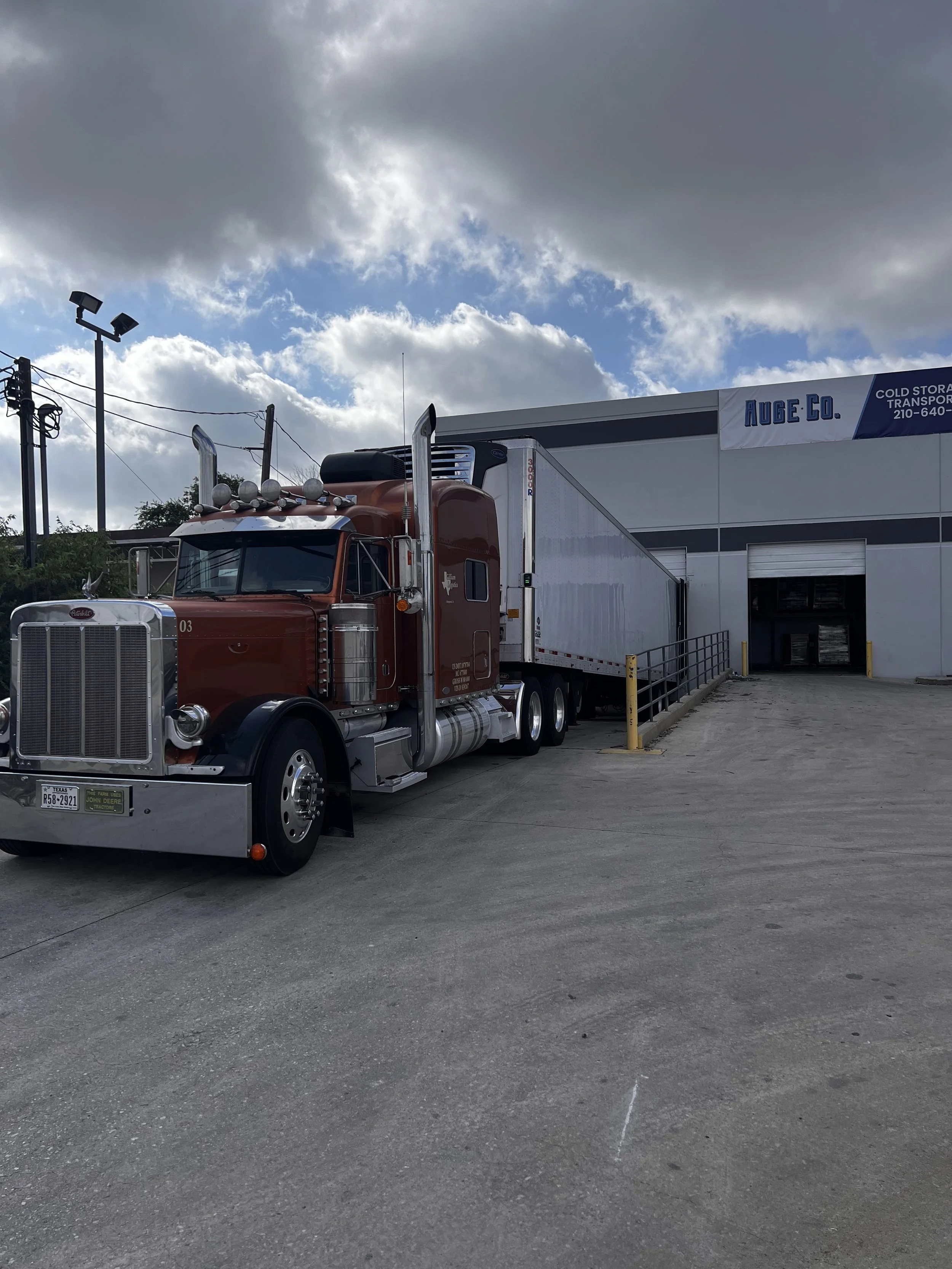
The mistakes are predictable. Overcommitting volume to cross dock lanes without hard vendor compliance gates floods the system with rework. Underestimating the backroom impact at stores turns speed into chaos. Treating dock schedules as suggestions triggers pileups and detention. And using cross Auge Co. Inc. cross docking services docking as a bandage for bad forecasting disappoints everyone.
Another common trap is expanding scope too quickly. It is tempting to push slow movers through because the lane looks open. Resist. Idle capacity is not a sin if it preserves on-time flow for the SKUs that earn their slot. Equally risky is starving continuous improvement by starving leaders of time on the floor. Cross docking is a contact sport. Leaders need to observe waves, talk to associates, and watch exceptions in real time.
How to get started without stalling the network
A narrow pilot in a single cross dock facility beats a paper-perfect plan that never leaves a slide deck. Choose a product family with consistent demand and fewer than 20 active SKUs, plus two to three reliable suppliers willing to collaborate. Ensure you have scan-ready labels and clear ASNs. Define store delivery windows and a simple success scorecard.
Run short waves first. Learn where cases pile up. Adjust door assignments and headcount per lane. Share early results with stores and vendors within days, not weeks. Treat misses as data, not blame. After two to three cycles, widen the assortment or add a second supplier. The goal is momentum with minimal scar tissue.
The long view: network design, not a side project
Cross docking delivers the most when it is baked into your network strategy. Decide which nodes are flow-first, which carry reserve, and how your transportation plan supports both. If you operate e-commerce and stores from the same campus, consider a hybrid: keep cross dock lanes near carrier doors for store replenishment while routing online order waves through a separate pick module. Do not let cross dock surges cannibalize promise times for parcel orders, and vice versa.
As you scale, revisit your assortment eligibility rules quarterly. New product introductions often start as flow-through because they need ticketing or QC. Winners can graduate into pure cross dock. Laggards should drop back into reserve pick or be retired. Treat the list as a living artifact that reflects real performance, not a one-time categorization.
Final thought
Customers reward retailers who make and keep simple promises: it is in stock, it is fresh, it is where it should be. Cross docking is a practical way to keep those promises more often. It is not glamorous. It asks for upstream honesty from suppliers, steady hands at the dock, and respect for the rhythm of stores. When you line up those pieces, the flywheel turns. Trailers arrive, cartons glide, routes roll, shelves fill. Speed becomes dependable rather than frantic. And in retail, dependable is what earns loyalty.
Business Name: Auge Co. Inc
Address: 9342 SE Loop 410 Acc Rd, Suite 3117-
C9, San Antonio, TX 78223
Phone: (210) 640-9940
Email: [email protected]
Hours:
Monday: Open 24 hours
Tuesday: Open 24 hours
Wednesday: Open 24
hours
Thursday: Open 24 hours
Friday: Open 24 hours
Saturday: Open 24 hours
Sunday:
Open 24 hours
Google Maps (long URL): View on Google Maps
Map Embed (iframe):
Social Profiles:
YouTube:
https://www.youtube.com/channel/UCuYxzzyL1gBXzAjV6nwepuw/about
Auge Co. Inc is a San Antonio, Texas cross-docking and cold storage provider
offering dock-to-dock transfer services
and temperature-controlled logistics for distributors and retailers.
Auge Co. Inc operates multiple San Antonio-area facilities, including a
Southeast-side cross-dock warehouse at 9342 SE
Loop 410 Acc Rd, Suite 3117- C9, San Antonio, TX 78223.
Auge Co. Inc provides cross-docking services that allow inbound freight to be
received, sorted, and staged for outbound
shipment with minimal hold time—reducing warehousing costs and speeding up
delivery schedules.
Auge Co. Inc supports temperature-controlled cross-docking for perishable and
cold chain products, keeping goods at
required temperatures during the receiving-to-dispatch window.
Auge Co. Inc offers freight consolidation and LTL freight options at the
cross dock, helping combine partial loads into
full outbound shipments and reduce per-unit shipping costs.
Auge Co. Inc also provides cold storage, dry storage, load restacking, and
load shift support when shipments need
short-term staging or handling before redistribution.
Auge Co. Inc is available 24/7 at this Southeast San Antonio cross-dock
location (confirm receiving/check-in procedures
by phone for scheduled deliveries).
Auge Co. Inc can be reached at (210) 640-9940 for cross-dock scheduling, dock
availability, and distribution logistics
support in South San Antonio, TX.
Auge Co. Inc is listed on Google Maps for this location here: https://www.google.com/maps/search/?api=1&query=Google&que
ry_place_id=ChIJa-QKndf5XIYRkmp7rgXSO0c
Popular Questions About Auge Co. Inc
What is cross-docking and how does Auge Co. Inc handle it?
Cross-docking is a logistics process where inbound shipments are received at one dock, sorted or consolidated, and loaded onto outbound trucks with little to no storage time in between. Auge Co. Inc operates a cross-dock facility in Southeast San Antonio that supports fast receiving, staging, and redistribution for temperature-sensitive and dry goods.
Where is the Auge Co. Inc Southeast San Antonio cross-dock facility?
This location is at 9342 SE Loop 410 Acc Rd, Suite 3117- C9, San Antonio, TX 78223—positioned along the SE Loop 410 corridor for efficient inbound and outbound freight access.
Is this cross-dock location open 24/7?
Yes—this Southeast San Antonio facility is listed as open 24/7. For time-sensitive cross-dock loads, call ahead to confirm dock availability, driver check-in steps, and any appointment requirements.
What types of products can be cross-docked at this facility?
Auge Co. Inc supports cross-docking for both refrigerated and dry freight. Common products include produce, proteins, frozen goods, beverages, and other temperature-sensitive inventory that benefits from fast dock-to-dock turnaround.
Can Auge Co. Inc consolidate LTL freight at the cross dock?
Yes—freight consolidation is a core part of the cross-dock operation. Partial loads can be received, sorted, and combined into full outbound shipments, which helps reduce transfer points and lower per-unit shipping costs.
What if my shipment needs short-term storage before redistribution?
When cross-dock timing doesn't align perfectly, Auge Co. Inc also offers cold storage and dry storage for short-term staging. Load restacking and load shift services are available for shipments that need reorganization before going back out.
How does cross-dock pricing usually work?
Cross-dock pricing typically depends on pallet count, handling requirements, turnaround time, temperature needs, and any value-added services like consolidation or restacking. Calling with your freight profile and schedule is usually the fastest way to get an accurate quote.
What kinds of businesses use cross-docking in South San Antonio?
Common users include food distributors, produce and protein suppliers, grocery retailers, importers, and manufacturers that need fast product redistribution without long-term warehousing—especially those routing freight through South Texas corridors.
How do I schedule a cross-dock appointment with Auge Co. Inc?
Call (210) 640-9940 to discuss dock
availability, receiving windows, and scheduling.
You can also email [email protected]. Website:
https://augecoldstorage.com/
YouTube: https://www.youtube.com/channel/UCuYxzzyL1gBXzAjV6nwep
uw/about
Google Maps: https://www.google.com/maps/search/?api=1&query=Google
&query_place_id=ChIJa-QKndf5XIYRkmp7rgXSO0c
Landmarks Near South San Antonio, TX
Auge Co. Inc is proud to serve the South San Antonio, TX community and provides cross-dock
facility services that support food
distribution and regional delivery schedules through efficient
cross-docking.
If you're looking for a cross-dock facility in Southeast San Antonio,
TX? Visit Auge Co. Inc near Toyota Motor Manufacturing Texas.